



Scordatura Led Into Oblivion Review
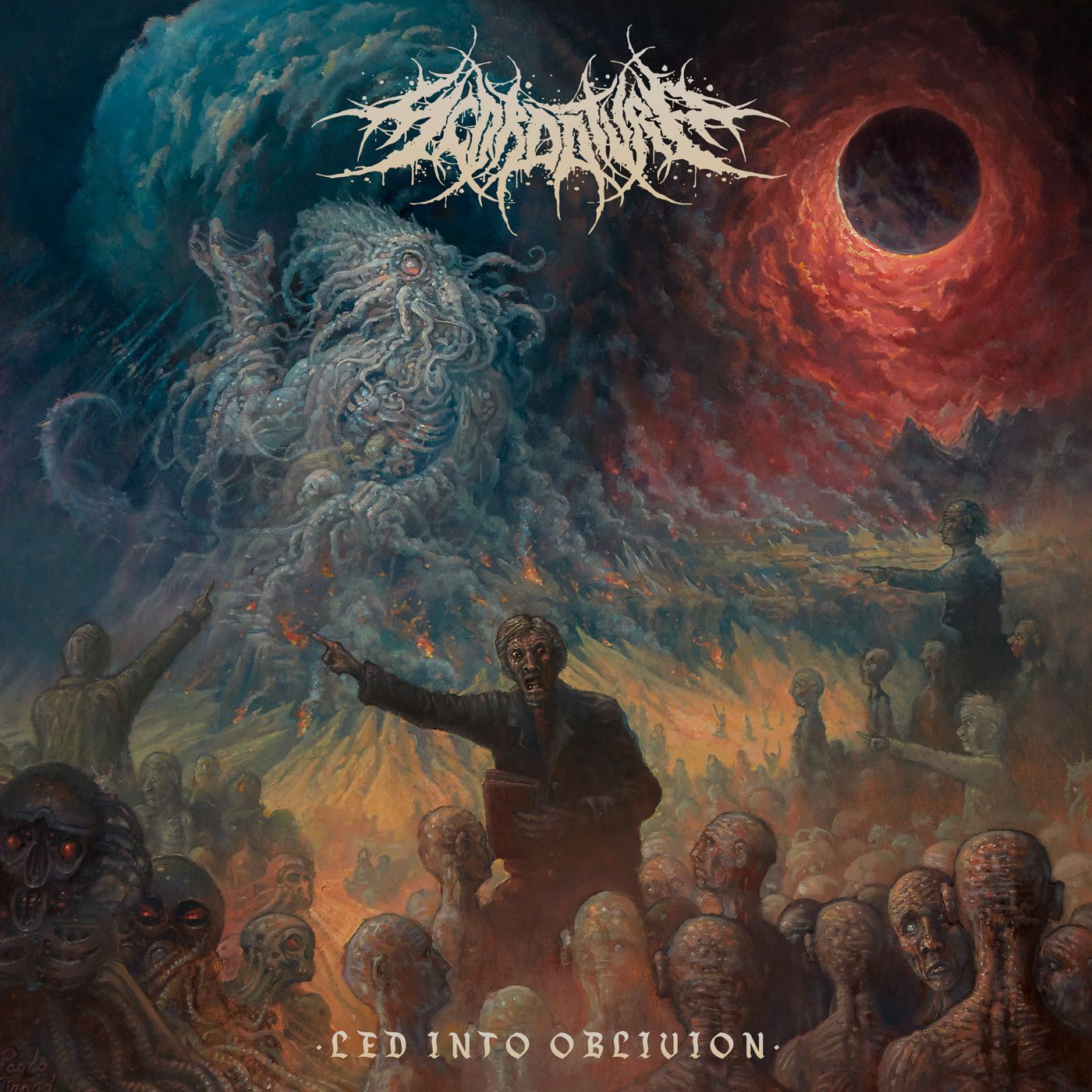
Scordatura
Led Into Oblivion
Everlasting Spew
2026
When you think of death metal, and any of its offshoots or styles, do you typically think, “Man, I bet Scotland has a killer scene of bands!”? No? Me either. However, since 2007, Scordatura (whose name is Italian for “discord” or “mistuning”) have been putting that very place on the map for the genre. I am sure there are other Scottish death metal bands, but I admit to not knowing of any. I will investigate this further in the future. Pondering geographically annamolous bands notwithstanding, these filthy dogs are back with their fourth full-length, the nine-song Led to Oblivion.
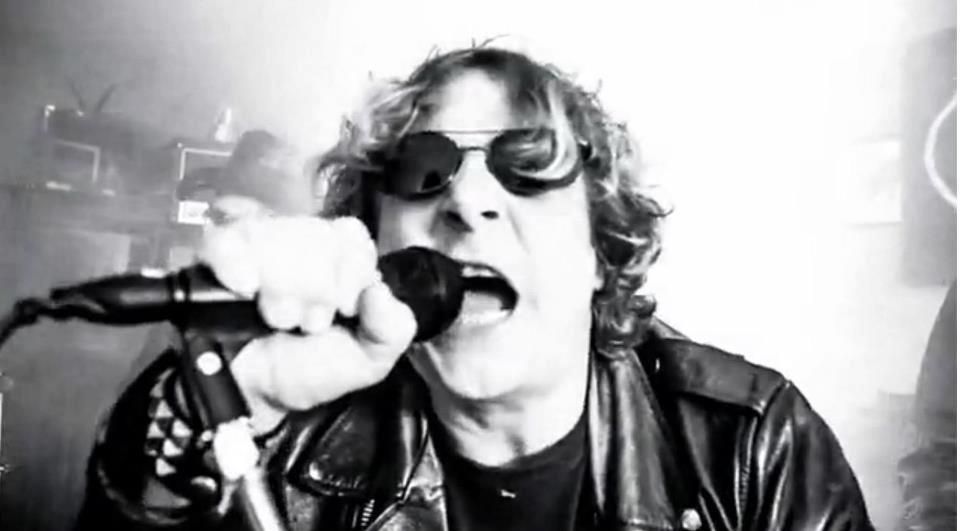
Scordatura are what I would categorize as a “brutal” death metal band. This differs from classic DM in that it is (usually, with exceptions) incredibly fast, technical, and busy with the drumming and guitar riffs. The vocal approach of Darrel Boyce is usually of the deep, low guttural variety (first adopted by Frank Mullen of Suffocation and Chris Barnes of Cannibal Corpse over 35 years ago) and can go from indecipherable gurgles to clearly annunciated to the bree brees, inhales, exhales, and “pig squeals” of the more modern bands. Now that the uninitiated have a handle on the sonics, let's delve deep into the rotting carcass of these tunes, shall we?
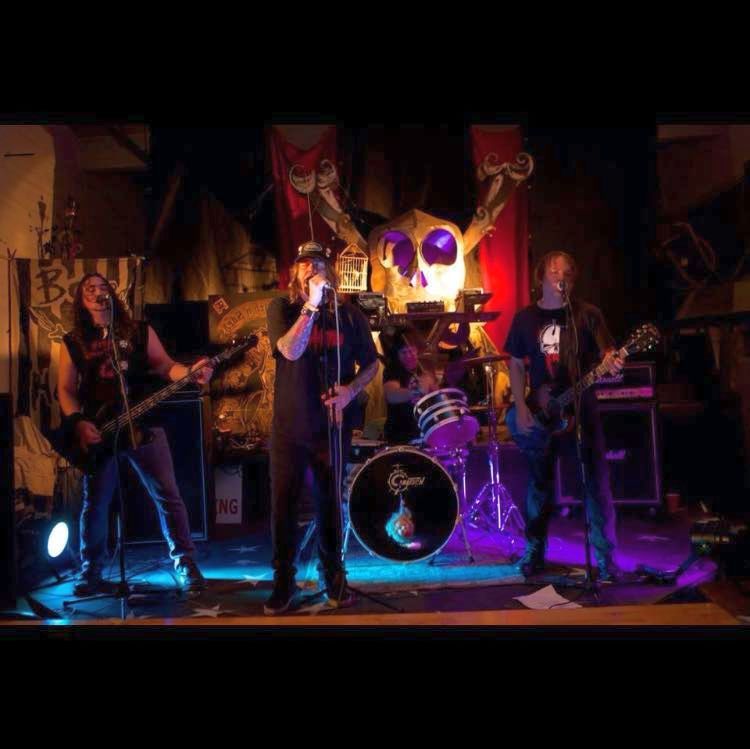
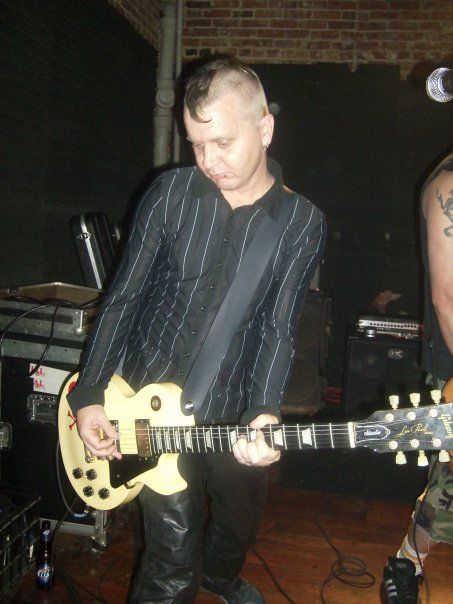
Buoyed by their writing sessions that began in 2021, Scordatura have opted for a more refined, less chaotic approach this time around. All of the fat has been trimmed, and the arrangements are tighter, leaner, and with a focus on more groove parts. The blasts and wrist-cramp-inducing tech flourishes are still there, but they serve to accentuate more than carry entire songs. Another noticable difference is that while the drums have an obviously modern slant, the rest of the production seems to be all organic, based on the guitar and bass tones. The guitars in particular are of interest because, while they are prerequisitely low-tuned, they aren't piling on a copious amount of distortion/gain. In doing so, they are much more articulate, and the busier sections result in more clarity, which highlights the prowess of guitarist Owen McKendrick. The rhythm section of Liam Mccafferty (bass) and drummer Tam Moran anchor the bottom end and the time changes proficiently, loudly, and impressively. Every viral belch, every chug, every Herculean drum fill and bassline are perfectly audible, and there is no mush or mud to be found in the overall mix, which was handled by Malcolm Abbou, with mastering by Korentin Mens.
The compositional lengths also reflect Scordatura’s single-minded, carefully honed approach here too. No song is longer than 3 to 3.5 minutes. After the 40 seconds of intro “Doomed to Fate,” the title track shotgun blasts our faces off with unrelenting speed and venom, swirling in and out of blast beats, drum/guitar accents, and a monumentally heavy mid-tempo bridge section before going back to sound-barrier-breaking brutality in the outro. Another haillmark of this school of death metal is the use of six-string pinch harmonics, which are on full display in the much busier “Existential Termination.” “Echoes of a Fractured Mind” is next, with more speed-of-light structure and some tasty down-tuned thrash-inspired riffing amidst the pummeling. “Oppressed Repressed” stays on the same course and has a double-kick-led breakdown section that is sure to keep my head bobbing every time I hear it. The highlight here for me is “A Manic indoctrination,” which is a crushing, chugging mid-tempo monster that just lurches forward and even has some hardcore-esque gang shouts. “Retali(H)ate” and “When the Red Moon Hangs Low” are absolute burners and probably two of the shortest songs here, and recall older material, as these lean more on all-out ferocity and chaos. “Maw of the Void” brings back the mid-tempo breakdowns and gang shouts, while closer “Begging to Die” wraps things up with slam-inspired riffing, those reoccurring pinch harmonics, and swaying in and out of blasts, slower moments, and even a d-beat section that shows flashes of dissonance before held-out single chords bring it all home.
Scordatura have crafted an album that is not only true to their humble (yet all-over-the-place) beginnings, but also brings fresh, razor-sharp, focused new elements into their sound atop lyrical themes exploring the idea that mankind is headed for its own demise with the rising reliance on technology and artificial intelligence. They are ugly ideas to discuss and somewhat hopeless to ponder, and they make quite a few of us quite angry. To that, I'll say this: Led to Oblivion is the perfect album for such anger, and points the finger back at society as a whole with an engaging, hateful sound that will have many drawing back a bloodied stump if they aren't ready for how strong its bite is…
RIYL - Cryptopsy, Suffocation, Origin, Pathology
~TB