



Necrofier Transcend Into Oblivion Review
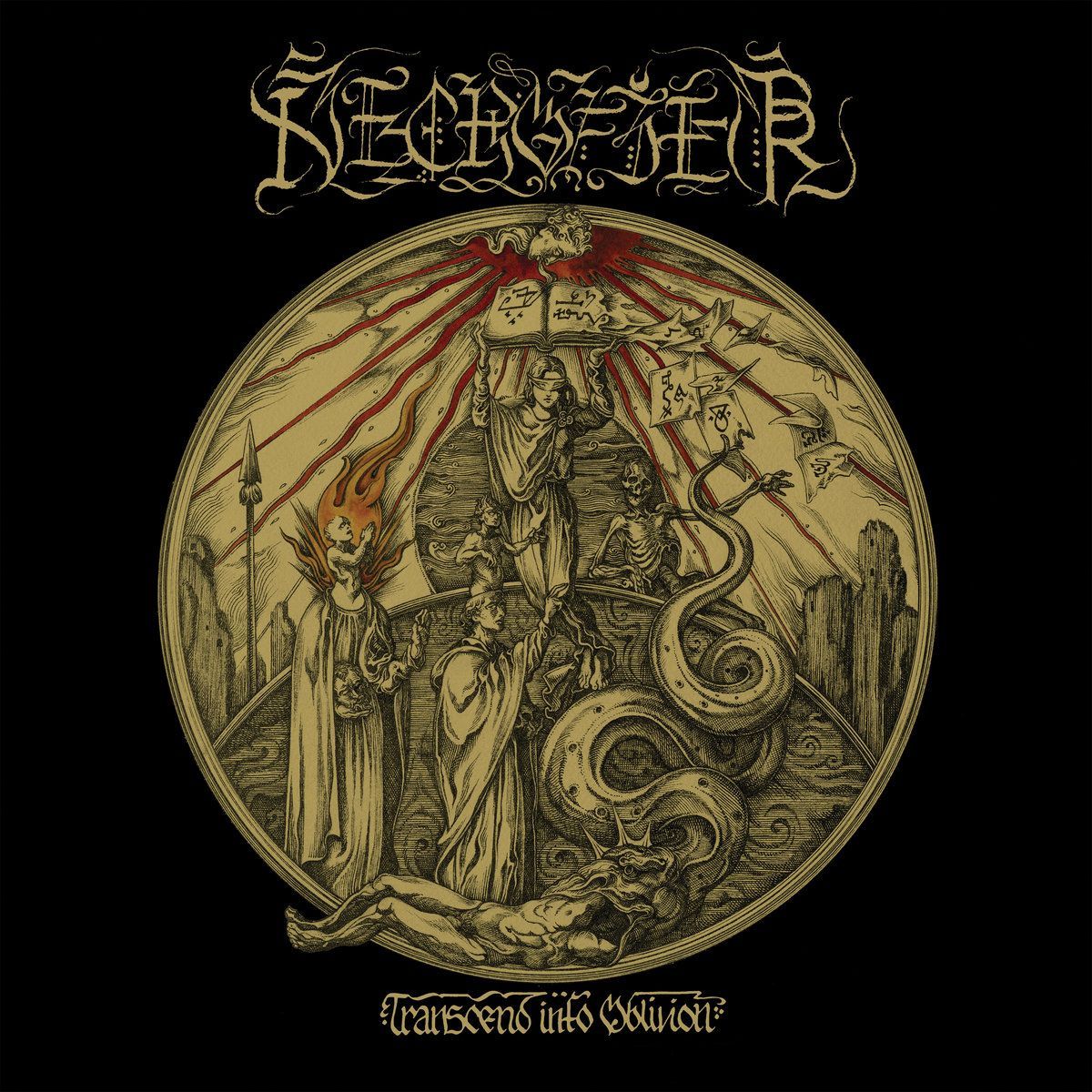
Necrofier
Transcend Into Oblivion
Metal Blade Records
2026
Often when a band signs to a bigger label, suddenly the rough edges get sanded off. This isn’t at all what happened with Metal Blade’s recent signing of Houston’s Black Metal lifers, Necrofier. The band’s MBR debut “Transcend Into Oblivion” feels like it crawled out of a basement at 2am… it’s just a bigger basement now. Black Metal isn’t my thing at all on most days, but there are moments and albums that really latch on, this is one of those rare times where I was really drawn in.
Necrofier has always lived in that space between traditional Black Metal coldness and something a little Heavier Metal spirited. Not Rock ‘N Roll, not Melodic Death, more like ritualistic aggression that remembers that riffs matter. The album immediately leans into that approach: shorter compositions, recurring themes, and a structure that plays more like movements than songs. You don’t just listen to tracks; you move through phases.
The guitars carry the whole record. Not in a wall-of-noise way either, the tremolo picking cuts, but the band constantly drops into slower, stomping sections that feel almost epic instead of chaotic. That push and pull keeps the album from becoming background blur, which is the curse of a lot of modern Black Metal releases.
Production wise, this is the biggest change from their earlier material. It’s clearer, but not clean. You can hear the bass moving underneath the riffs and the drums have weight instead of sounding like a distant typewriter. The atmosphere is still there; it’s just not buried under tape hiss. The result is something more immersive than raw.
Vocally, the delivery avoids the theatrical and sticks to conviction. No over-processed shrieks, no cavern echo, just a commanding rasp that feels grounded in the music instead of floating above it. It helps the album feel intentional rather than aesthetic.
What really makes the record stand out is how it’s arranged. The recurring track suites and pacing give the whole album a narrative flow. Faster sections ignite, mid-tempo parts feel almost ceremonial, and the longer passages let melodies sink in before the next wave hits. You end up remembering moments rather than just speed.
And that’s the key difference; this album isn’t trying to overwhelm you constantly. It wants to pull you in.
If there’s criticism, it’s commitment. This album demands attention. You don’t throw this on while doing dishes and absorb it. It’s a sit-down, with the light’s low kind of record. Some listeners want instant hooks; this one’s a grower.