




Di'anno Iron Maiden's Lost Singer Review
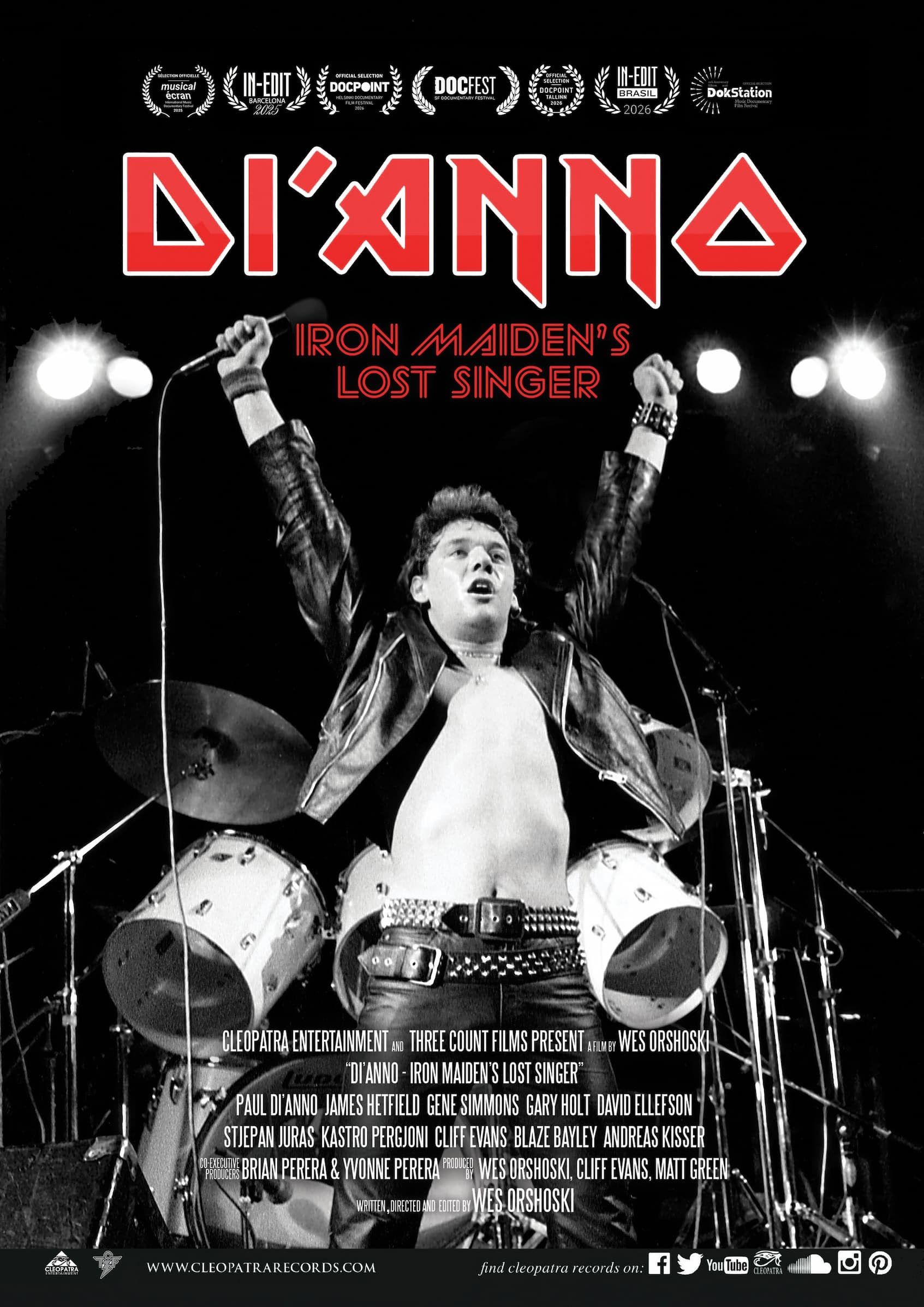
On the heels of missing the Iron Maiden documentary “Burning Ambition”, I was fortunate enough to get my hands on a screener for another upcoming documentary, “Di’Anno: Iron Maiden’s Lost Singer”. I honestly had no idea either of these documentaries were coming out, but that’s not unusual. Thankfully, I’m lucky enough to have access to some great people and labels, one of my favorites being Cleopatra Records, the label responsible for bringing this documentary to audiences.
The film will be released on VOD, DVD/Blu-ray, and in a limited theatrical run. The U.S. run will be brief, including a showing at the San Francisco Documentary Festival on June 3rd. It will also receive its North American theatrical premiere for public audiences at the Lumiere Music Hall Theater on June 9th, 2026.
If you don’t know who Paul Di'Anno is, then you either haven’t lived or your Metal Maniac credentials may need to be reviewed. Di’Anno was the original voice of Maiden - or more accurately, the voice behind the first two albums: the self-titled debut and “Killers”. Fans have debated Paul versus Dickinson for decades, and many have planted their flags firmly in one camp or the other. Personally, I’ve never looked at it that way.
I heard the self-titled album first. It was dirtier, rougher around the edges - Punk attitude colliding headfirst with the spirit of the New Wave of British Heavy Metal. It felt alive. It still does. I suppose I’m a Paul guy at heart, though I love them both. I can still smell the leather and remember being a kid staring at Eddie on that album cover while hearing Paul’s voice roar through the speakers. Some memories stay with you forever. Few bands, past or present, can touch what Maiden became.
The title “Iron Maiden’s Lost Singer” is painfully appropriate because Paul truly was lost - lost to himself as much as anyone else. Lost to poor decisions, to addiction, to attitude, to the endless war between self-destruction and self-preservation. Sadly, stories like that aren’t uncommon among gifted artists. Talent and torment often seem to arrive hand in hand, especially when nobody is there to pull someone back from the edge.
There are always three sides to every story: yours, theirs, and the truth somewhere in the middle. This documentary feels brutally committed to finding that truth. It follows Paul through the final years of his life with almost uncomfortable honesty.
I followed Paul’s career casually over the years. I’d buy a CD whenever I stumbled across one or heard something new coming, but I never followed him personally. You simply can’t keep up with everyone. What I didn’t know was how much he had deteriorated physically – he was confined to a wheelchair, battling failing knees, enduring endless pain after years of wear, abuse, accidents, and neglect.
Watching him struggle is heartbreaking.
There are moments where he cries. Moments where he’s scared. Moments where he looks tired in a way that goes beyond physical exhaustion - the exhaustion of someone who spent decades carrying his own demons on his back. Watching medics move him around, seeing him vulnerable and uncertain, was difficult to sit through.
I found myself tearing up several times.
Normally, I’m not someone who easily gets swept up by emotion, but this hit differently. Maybe it’s because I’ve admired him since I was a kid. Maybe it’s because beneath the bravado and rough exterior there was still a lonely human being fighting through pain. Paul was often his own worst enemy, but I still felt a strange connection watching him. It felt like watching someone stand against the world with nothing but stubbornness and pride left in the tank. He kept his circle small and often lived like a loner - and that’s a feeling some of us know all too well. (I’m some of us).
Thankfully, the documentary isn’t all darkness.
There are brighter moments where friends and peers speak about Paul with admiration and affection. James Hetfield, Dave Ellefson, Bobby Blitz and Gary Holt all discuss Paul’s importance and influence. You can hear those early Maiden fingerprints all over the records that followed.
There’s even a cameo from Gene Simmons where he tells Paul he always preferred his voice. Whether Gene was being completely honest or just being kind is up for debate, but it was still a genuinely nice moment.
The film also digs into what ultimately pushed Paul out of Maiden and why Bruce Dickinson came in to replace him. Again, much of it circles back to Paul himself. Throughout the documentary you witness a cycle of rise and fall, hope and regret, strength and collapse.
That’s what keeps you invested.
Then again, how could you not be? It’s Paul Di’Anno.
There’s footage of him performing in his later years and some of it is hard to watch, but some of it is absolutely electric. Even sitting in a wheelchair, Paul still had IT. That presence. That fire. That thing some people spend their entire lives chasing and never find.
Because Paul required constant care, the film also repeatedly touches on the financial realities surrounding his health. He eventually had to go to Croatia to receive surgeries and treatment that he desperately needed. There’s something strangely poetic about that - a man who spent much of his life feeling disconnected ending up as a stranger in a strange land searching for healing.
What I didn’t know was how much fans had stepped in to help him over the years through fundraising efforts. Even Maiden themselves contributed, paying for surgeries and offering support. There’s a genuinely touching moment where Paul briefly reconnects with Steve Harris backstage at a Maiden show.
That scene hit hard.
No matter what happened between them, history has a way of binding people together. Some connections never fully disappear.
Director Wes Orshoski, who also worked on documentaries involving Lemmy Kilmister and The Damned, does an incredible job here. The film looks beautiful. The sound design is excellent. The cinematography often creates an eerie contrast between Paul’s physical decline and the giant shadow of the legend he once was.
But make no mistake: this isn’t an easy watch.
It’s raw, uncomfortable, honest, and dark. That honesty is what I appreciated most. Paul deserved this documentary because his story deserved to be told. Not by rumors, headlines, or secondhand narratives, but by Paul himself while he was still here.
The only thing I found myself wanting was more involvement from the Maiden camp. Even difficult conversations would have added another layer of closure. Still, this is Paul’s story before, during, and after Iron Maiden.
And despite everything, it somehow ends on a note that feels uplifting, even though we already know how it ends.
Paul would eventually pass away from heart failure at age 66.
He never fully got out of the wheelchair. He never walked freely again. But he kept touring. He kept playing music. He kept showing up for the people who loved him.
And maybe that’s enough.
Money never meant much to Paul. He famously sold his Maiden publishing rights for pennies compared to what they would eventually become worth and burned through much of it in the chaos of living hard and fast. Yet through all of it, Paul Di’Anno remained exactly who he always was - loud, stubborn, damaged, charismatic, and unforgettable.
The ultimate Wrathchild... A huge reason Iron Maiden became what they are today.
If you’re in California when this hits theaters, or in the UK, don’t miss the chance to see this on the big screen. Paul may no longer be with us, but this documentary feels necessary.
And somewhere beyond the noise, beyond the stage lights and amplifiers, beyond this world entirely, maybe Paul Di’Anno is smiling...
Finally Running Free once again.